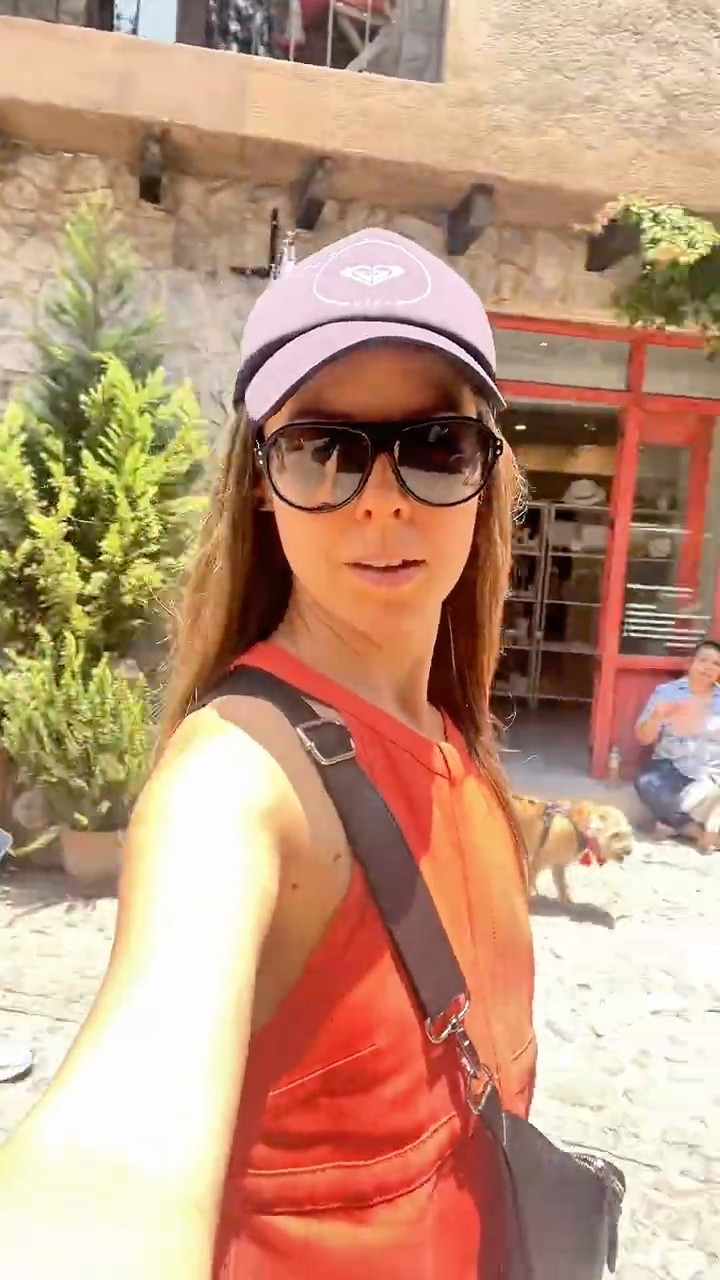
- Where
- Val'Quirico, Nativitas, Tlaxcala
- @valquirico
- Reviewed
- June 28, 2026 · updated September 17, 2026
Tepoztlán & day trips · experience
Val'Quirico
a built Tuscan village on the ruins of a dairy hacienda
~90 minutes from Mexico City: a tiny Tuscan town a developer built after falling for a medieval village in Italy, raised on the ruins of a 100-year-old hacienda. Cobblestone streets, stone villas, boutique shops, wine & Italian food. The perfect day trip.
A private residential and tourist complex near Nativitas, raised on the remains of the Hacienda Santa Águeda and modelled on San Quirico d'Orcia in Tuscany, with cobbled streets, five hotels, Italian restaurants and free entry. Here is how a visit works, what it costs and how to get there.
Quick facts
- What it is
- Built Tuscan-style village and residential complex on a hacienda ruin
- Entry
- Free · you pay only for parking
- Parking
- 50 MXN weekdays · 200 MXN weekends and holidays, flat fee per car
- Hours
- 9:00 to 23:00 · most restaurants start service around 11:00
- Staying
- Five hotels inside: Pietro Santo, Villa Toscana, Canaria, Bella Toscana, Porta Paradiso
- Getting there
- About 2 hrs from CDMX · 25 min from Puebla · 20 min from Tlaxcala
What Val’Quirico is
Val’Quirico is a built Tuscan-style village in Tlaxcala, between Nativitas and Puebla, about two hours from Mexico City. It is not a historic town and does not claim to be one. The complex was raised on the ruins of the Hacienda Santa Águeda, a Porfiriato-era estate that worked in dairy cattle and agriculture, and the old hacienda structures were folded into the new construction.
The model is San Quirico d’Orcia, a small municipality in Tuscany. The name means Valle de Quirico, after the Tuscan town that venerates San Quirico. What that produces on the ground is cobblestone streets, stone villas, towers, arches and small squares, with boutique shops, cafés, bars and restaurants at street level and apartments and hotels above.
The important thing to understand before you go is that this is a private, inhabited residential complex that markets itself as a destination, described by its owners as the first of the Reinos de México. People live there permanently. Entry is free and unticketed, and the only charge to get in is parking.
Who built it
The development came from a group of Mexican investors and the concept is credited to one of the shareholders, who travelled through the Italian countryside, fell for the medieval villages there and proposed rebuilding that atmosphere on the hacienda ruins in Tlaxcala. The hacienda itself dates to the Porfiriato, the long presidency of Porfirio Díaz before the Mexican Revolution, and had been a dairy and farming estate before it fell into ruin. The complex has kept expanding since, adding hotels, streets and commercial space, and it now sells itself as a destination in its own right rather than as a stop on the way to Puebla.
How a visit works
There is no ticket, no entrance gate and no set route. You park, you walk in, and the complex functions as a pedestrian village.
- Hours: the complex is open 9:00 to 23:00 daily, and restaurants generally start serving around 11:00.
- Getting around: entirely on foot, on cobblestones, with no vehicles in the streets.
- Shopping: boutiques, specialty shops, cafés and bars along the ground floors.
- Eating: Italian food is the dominant cuisine, with gourmet and French options too.
- Staying: five hotels operate inside the complex.
- Events: private events are bookable, and public events are announced on the complex’s own social channels rather than on a printed calendar.
What to eat and see
- Pizza, pasta and wine, which is what most of the restaurants are built around.
- Cafés and bars for the middle of the afternoon, when the light on the stone is best.
- The main squares and the tower streets, which are the most photographed parts.
- The hotel courtyards, several of which you can walk into.
- Mexican-Italian in practice: pasta with chile poblano salsa and micheladas alongside the wine list.
What it costs
| Item | Price |
|---|---|
| Entry to the complex | free |
| Parking, Monday to Friday | 50 MXN per vehicle, flat fee for the whole stay |
| Parking, weekends, holidays and school holidays | 200 MXN per vehicle, flat fee |
| Food and drink | paid at each restaurant, Italian mid-range |
| Hotels inside the complex | booked directly with each hotel |
The parking fee is the only unavoidable cost and it is charged once, not by the hour. Everything else depends on how long you stay and how many restaurants you stop at. Figures are as published by Val’Quirico and current as of my visit in June 2026.
How to visit
No booking is needed to enter. What is worth booking in advance:
- A restaurant table on a Saturday or Sunday, when the complex fills with day trippers from Puebla and Mexico City.
- A hotel room if you want the streets early and late, when they are almost empty.
- A tour from Mexico City if you would rather not drive, since several agencies bundle round-trip transport with a guided walk.
- Private events, which the complex handles by reservation.
Getting there
- Address: Kilometre 2, Carretera a Xoxtla, Santa Isabel Tetlatlahuca Xicoténcatl, Tlaxcala, Mexico, in the Nativitas area, also listed as Santeagueda.
- From Mexico City: about two hours by car on the Mexico to Puebla highway, following the Tlaxcala turn-off and the Xoxtla exit.
- From Puebla: about 25 minutes. From Tlaxcala city: about 20 minutes.
- From Puebla international airport: 15 to 20 minutes.
- By bus: from the TAPO terminal in Mexico City to Tlaxcala or Puebla, then a taxi or local transport for the final stretch.
- Parking: paid car parks at the edge of the complex, since the streets themselves are pedestrian.
Before you go
- Wear shoes you can walk in. The whole complex is cobblestone, and the complex says so itself.
- Do not arrive at 9:00 expecting lunch. The gates open early, the kitchens do not.
- Bring cash for parking, and remember the weekend fee is four times the weekday one.
- Weekdays are quieter and cheaper to park, and the streets photograph better without crowds.
- Dogs are welcome on a leash, with water stations and terrace seating.
- Combine it with Puebla or Tlaxcala. Both are under half an hour away and both have more history than a built village can offer, which makes Val’Quirico a better half day than a full one.
- Check the hours before you go. The hours on this page come from the venue’s public listings, which drift, so confirm on Google Maps or the venue’s own channels before a special trip.
Watch the visit
The reel above walks the cobbled streets, the stone villas and the squares of Val’Quirico. For the rest of the day trips in this set, open my map or browse the Tepoztlán and day trip recommendations.
Frequently asked questions
How much does it cost to enter Val'Quirico?+
Entry to Val'Quirico is free. The only compulsory cost is parking, charged as a single flat fee for your whole stay: 50 MXN on weekdays and 200 MXN on weekends, holidays and school holidays, per private vehicle. Everything else, food, drinks, shops and hotels, is paid separately.
What are Val'Quirico's opening hours?+
The complex is open daily from 9:00 to 23:00, with adjustments around major holidays. Most restaurants do not start service until about 11:00, so an early arrival gets you empty cobbled streets for photographs but nowhere open to eat. Individual shops and restaurants set their own hours inside that window.
Is Val'Quirico a real village or a development?+
It is a development, and it does not pretend otherwise. Val'Quirico was built on the ruins of the former Hacienda Santa Águeda, a Porfiriato-era dairy and farming estate, after one of the shareholders travelled through the Italian countryside and proposed recreating it in Tlaxcala. It is also genuinely inhabited: people live there, alongside the hotels and restaurants.
How do I get to Val'Quirico from Mexico City?+
By car it is roughly two hours: take the Mexico to Puebla highway, follow the Tlaxcala turn-off and exit for Xoxtla. By bus, travel from the TAPO terminal to Tlaxcala or Puebla, then take a taxi or local transport for the last stretch. Several Mexico City agencies also sell day tours with round-trip transport included.
What is there to eat at Val'Quirico?+
Italian food dominates, with pizza, pasta and wine across most of the complex, plus gourmet and French options, cafés and bars. It is Mexican-Italian in practice rather than a transplant of Tuscany, so expect chile poblano to turn up in a pasta sauce and micheladas to be poured next to the wine.
Can you stay overnight in Val'Quirico?+
Yes. Five hotels operate inside the complex: Pietro Santo, which is pet friendly, Villa Toscana, Hotel Canaria, Bella Toscana and Porta Paradiso. Staying over is the way to see the streets without the day-trip crowds, in the early morning and after the restaurants close.
Is Val'Quirico dog friendly?+
Yes, with conditions. Val'Quirico welcomes pets on a leash, restaurants have terraces where dogs can sit, and there are water stations in the complex. One of the hotels inside, Pietro Santo, is pet friendly if you want to stay the night with a dog.
Is Val'Quirico worth a day trip?+
It works as a half-day stop if you are already going to Puebla or Tlaxcala, which are 25 and 20 minutes away. As a standalone trip from Mexico City it is a two-hour drive for a themed village, cobbled streets, stone villas, boutiques and Italian food, so decide whether the concept appeals before committing the day.