- Where
- Pan Ajeno, Garden Santa Fe, local A05, Santa Fe, Mexico City
- @panajeno
- Reviewed
- October 15, 2026 · updated October 5, 2026
Mexico City · bakery
Pan Ajeno
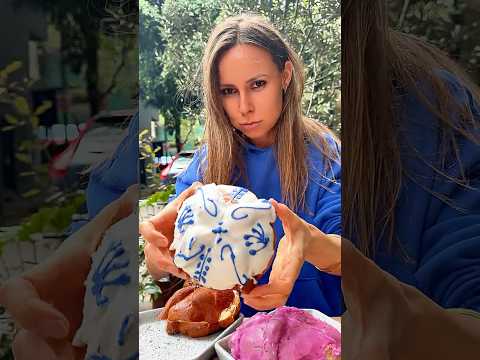
the black pumpkin pan de muerto
Episode 3 of 2026 Pan de Muerto Guide. A from-scratch bakery and pastry shop in Santa Fe. This season's filled pan de muerto comes in black-coated pumpkin and lemon, generously filled with cream, plus cajeta caramel and chocolate-coated hazelnut. Delivered in a gift box. Also known for brookies, scones and loaves like banana-nut and lemon poppy seed. Delivery available, pre-order via WhatsApp.
A from-scratch bakery in Garden Santa Fe whose filled pan de muerto comes in a black-coated pumpkin, a lemon, a cajeta caramel and a chocolate-coated hazelnut, packed in a gift box. Here is the season's lineup, how to order and what else the counter does.
Quick facts
- What it is
- From-scratch bakery and pastry shop in Garden Santa Fe
- This season
- Filled pan de muerto: pumpkin, lemon, cajeta caramel, hazelnut
- The pumpkin one
- Coated black · the reason this box photographs the way it does
- Ordering
- Message them. Seasonal breads are rarely on the delivery apps
- Hours
- Mon to Fri 08:00 to 19:30 · Sat 09:15 to 18:45 · Sun 09:00 to 16:30
- Getting there
- Garden Santa Fe, local A05 · Instagram @panajeno
What Pan Ajeno is
Pan Ajeno is a bakery and pastry shop in the Garden Santa Fe shopping centre, local A05, on Guillermo González Camarena in Santa Fe. It describes itself as making everything from scratch, selling from one retail counter while also supplying restaurants and delivering to homes.
The year-round business is scones, brookies, cookies, loaves and pies. For the weeks around Day of the Dead it adds a filled pan de muerto range, boxed as a gift, and that is the reason it turns up in people’s feeds every October.
Who is behind it
Nothing. I looked, and the public record on this bakery is close to empty: no founder named anywhere, no opening year, no interview. For a bakery with this much of a social-media footprint that is unusual, and it means the story here is the product rather than the person.
The name is the one thread worth pulling. Pan ajeno means someone else’s bread. There is an old Spanish saying, el pan ajeno hace al hijo bueno, roughly that bread from another household makes a child behave, and the name reads like a nod to it. Nobody has confirmed that, so it stays a likely reading rather than the official account.
The 2026 pan de muerto
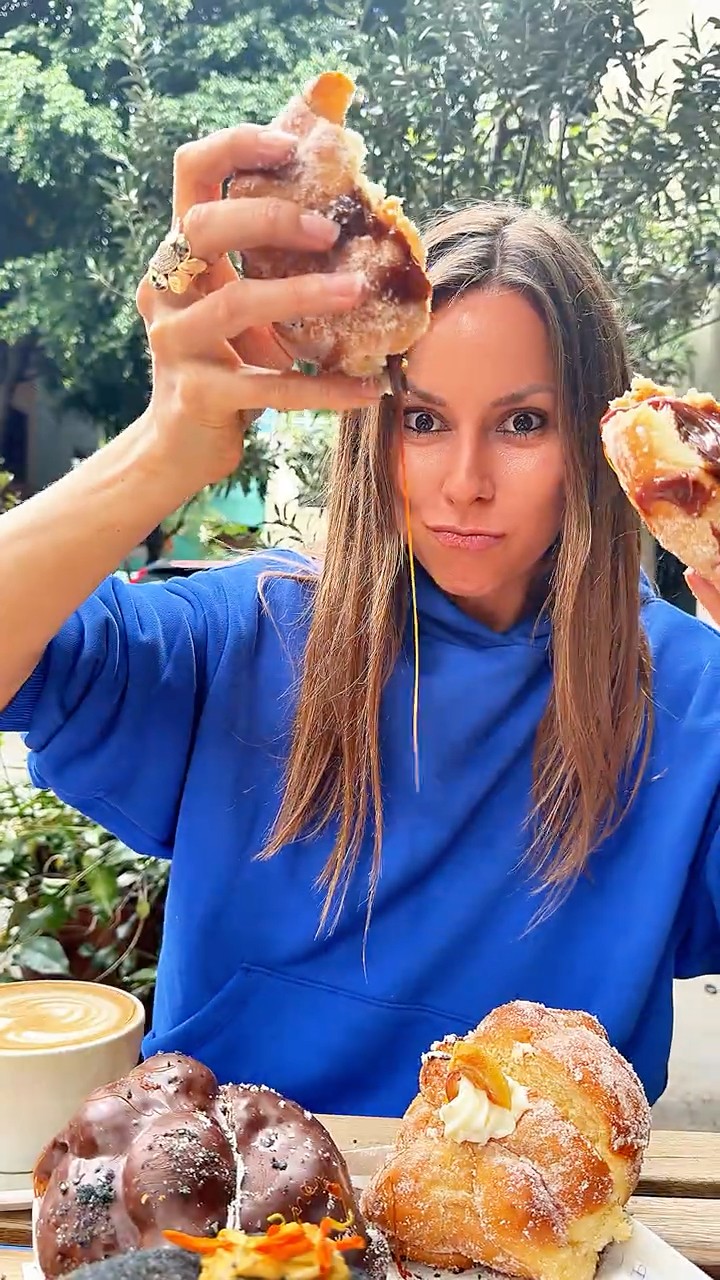
Four filled versions this season, and the filling is the point. These are not breads with a spoon of something in the middle; they are packed with cream, which is what separates them from the plain pan de muerto on every counter in the city.
- Pumpkin, coated black. The one that makes the box, and the one I would reorder. Sweeter and rounder than the lemon, with the cream doing most of the work.
- Lemon. The same generous cream with an acidity that cuts it, which stops the box feeling one-note.
- Cajeta caramel. The heaviest of the four. Sweet enough that it is a one-per-sitting bread rather than a share-and-repeat one.
- Hazelnut. The simplest build, under a thick layer of chocolate.
The bakery has made filled versions for several years and the lineup moves. Earlier seasons have included Lotus, dulce de leche, chocolate Abuelita and café de olla, so what you get depends on the year rather than on a fixed list.
What I ate
All four, out of the gift box. The black pumpkin was my favourite and the lemon ran it close, both for the same reason: an enormous amount of cream with enough acidity behind it to keep going. The cajeta sends you straight into a sweet coma. The hazelnut is the plain one of the set, and the chocolate layer is doing the talking.
Where the bread comes from
Worth knowing while you eat it, because the origin is contested rather than settled.
The ingredient list points colonial. Wheat, cane sugar, cow’s milk, butter, eggs and orange aroma all arrived with the Spanish, who brought a pan de ánimas offered for their own dead during the viceroyalty. Indigenous communities took it up because it fitted beliefs about feeding the dead that already existed. Several Mexican institutions argue the other way, tracing the bread to pre-Hispanic preparations instead. Both accounts are in wide circulation, and the honest answer is that the bread as you eat it today is a product of the collision rather than of either side alone.
What it costs
Pan Ajeno does not publish a price list of its own, and the seasonal breads are not reliably on the delivery apps, so the price comes with the answer when you message them.
For context on the wider market this year, a supermarket pan de muerto starts around 20 to 30 MXN a piece, and a filled one from a named bakery runs well above that. Pan Ajeno sits at the premium end of that spread, and the gift packaging is part of what you are paying for. If you are buying for yourself, a single flavour answers the question; if you are buying as a gift, the box of four is the reason to come here rather than to the nearest panadería.
How to book
There is nothing to reserve, but ordering seasonal bread in Mexico City is more awkward than it should be, and it is worth understanding why. The delivery apps list a bakery’s permanent counter. The pan de muerto runs for a few weeks a year, so most bakeries never load it onto the apps at all.
- Message them. WhatsApp or an Instagram DM to @panajeno is how you order the seasonal breads, confirm the flavours and get a price.
- Uber Eats and Rappi both carry the Santa Fe store for the everyday counter: the scones, the brookies, the loaves and the pies. Do not assume the pan de muerto is there.
- Order the box, not the piece, if the bread is a gift. The packaging is the differentiator.
- Go early in the season. Seasonal lines at small bakeries sell through, and the lineup is not restocked indefinitely.
Getting there
- Address: Garden Santa Fe, local A05, Guillermo González Camarena 1205, Santa Fe, Mexico City.
- The mall: Garden Santa Fe is built underground beneath a park, so allow time to find the level rather than assuming a street frontage.
- By car: this is a Santa Fe trip, so driving or a car app rather than public transport.
- Delivery: the practical option from most of the city, given where Santa Fe sits.
Before you go
- The flavours change every year. Check Instagram for the current lineup before you plan a box around a flavour you read about.
- Message before you drive. The bakery is inside a mall on the western edge of the city, so confirm the flavours are in before making the trip.
- The box is the product. Four flavours boxed as a gift is what this bakery does better than the queue-and-carry alternatives.
- Pace the cajeta. It is the sweetest of the four by a distance.
- Sunday is the short day, closing at 16:30.
- Ask the price when you message. It is not published, and the seasonal bread is usually not on the apps.
- Check the hours before you go. The hours on this page come from the venue’s public listings, which drift, so confirm before a special trip.
Watch the visit
The reel above is episode three of my 2026 pan de muerto guide: the black pumpkin, the cream and the box. For the hand-painted end of the same season, see Croque Voyage in Coyoacán, and for the rest of the city open my map or the Mexico City recommendations.
Frequently asked questions
What pan de muerto flavours does Pan Ajeno make?+
This season the filled range is a black-coated pumpkin, a lemon, a cajeta caramel and a hazelnut under a thick layer of chocolate. All of them are filled with cream rather than left plain. The bakery has run filled versions for years and the lineup changes, so earlier flavours like Lotus, dulce de leche, chocolate Abuelita and café de olla may or may not return.
Why is the pumpkin pan de muerto black?+
The coating is black, which makes it the one that stands out in the box and the reason this bread travels on social media. Underneath it is a pan de muerto filled generously with cream, and the pumpkin reads sweeter and rounder than the lemon. It was my favourite of the four, with the lemon the closest rival because of the acidity cutting the cream.
How do I order the pan de muerto from Pan Ajeno?+
Message them, by WhatsApp or Instagram DM. This is the part nobody explains: Uber Eats and Rappi carry the bakery's everyday counter, but the seasonal pan de muerto is usually not listed there, because it runs for a few weeks only. Searching the apps and finding no pan de muerto does not mean they are not making it. The seasonal breads arrive in a gift box.
Where is Pan Ajeno and what are its hours?+
The bakery is in the Garden Santa Fe shopping centre, local A05, at Guillermo González Camarena 1205 in Santa Fe, Mexico City. Listed hours are Monday to Friday 08:00 to 19:30, Saturday 09:15 to 18:45 and Sunday 09:00 to 16:30. Garden Santa Fe is an underground mall, so it is a drive-and-park trip rather than a walk.
What else is Pan Ajeno known for besides pan de muerto?+
The year-round counter is the real business. The most-ordered items are the mixed scones, the brookies, sold in boxes of six and twelve, and the mixed cookies. There are loaves such as banana and walnut and lemon poppy seed, pies including banoffee and a deep-dish pecan, a flourless chocolate cake with cream cheese frosting and pistachio praline, and a dulce de leche cheesecake.
Is the pan de muerto at Pan Ajeno good for a gift?+
That is arguably its main advantage over a bakery you queue at. The seasonal breads come boxed in packaging built to be given rather than carried home in a paper bag, and the four flavours together make a box that looks considered. For an office or a host, that matters more than shaving a few pesos off the price.
What does the name Pan Ajeno mean?+
Literally, someone else's bread. There is an old Spanish saying, el pan ajeno hace al hijo bueno, roughly that another household's bread makes a child behave, and the name may be a nod to it. Nothing published confirms that the bakery took its name from the saying, so treat it as a likely reading rather than the official story.
Is pan de muerto a pre-Hispanic or a colonial bread?+
The argument is genuinely unsettled. The ingredients point colonial: wheat, cane sugar, cow's milk, butter, eggs and orange aroma all arrived with the Spanish, who used a pan de ánimas as an offering for their dead, and which indigenous communities adopted into existing beliefs about the dead. Some Mexican institutions instead trace the bread to pre-Hispanic preparations, so both stories circulate.