- Where
- Croque Voyage, Avenida Miguel Hidalgo 76A, San Lucas, Coyoacán, Mexico City
- @croque_v
- Reviewed
- October 7, 2026 · updated October 5, 2026
Mexico City · bakery
Croque Voyage
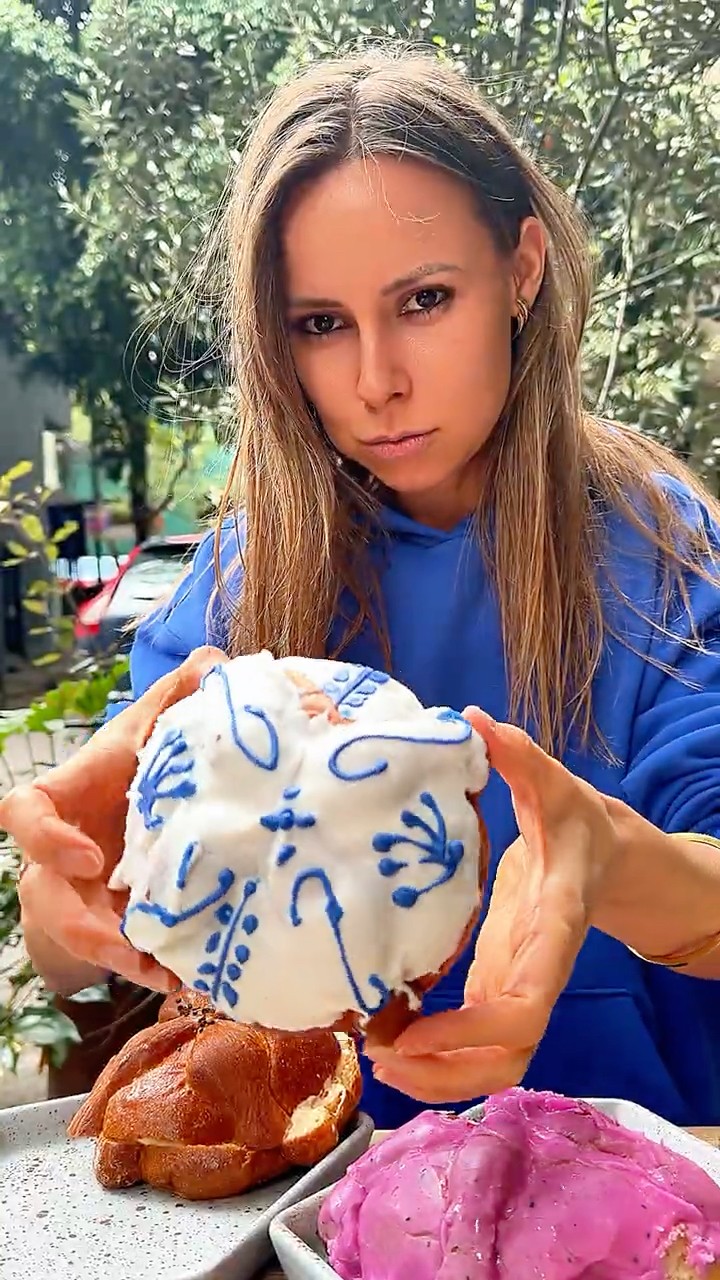
the hand-painted Talavera pan de muerto
Episode 1 of 2026 Pan de Muerto Guide. A small laminated-dough bakery near the centre of Coyoacán, known for its croissants. The 2026 pan de muerto collection includes the hand-painted Talavera with vanilla, orange blossom and mezcal, pink Pitahaya-Tuna coloured only with fruit, guava with diplomat cream filling, and a traditional version.
A laminated-dough bakery in San Lucas making four pan de muerto for the 2026 season, including a cobalt-blue Talavera painted by hand and flavoured with vanilla and mezcal. Here is the collection, the prices, how to order and when it ends.
Quick facts
- What it is
- Laminated-dough bakery in Coyoacán · croissants, kouign-amann, danish
- The collection
- Four pan de muerto for 2026 · 65 to 90 MXN each
- The Talavera
- Cobalt blue painted by hand, piece by piece · vanilla, orange blossom, mezcal
- Ordering
- Order the Talavera a day ahead · gift boxes 20 to 30 MXN extra
- Hours
- Mon to Fri 07:30 to 20:30 · Sat 09:00 to 20:30 · Sun 09:00 to 17:30
- Getting there
- Av Miguel Hidalgo 76A, San Lucas, Coyoacán · Instagram @croque_v
What Croque Voyage is
Croque Voyage is a small bakery at Av Miguel Hidalgo 76A in colonia San Lucas, a short walk from the centre of Coyoacán. Its specialism is laminated dough: croissants, kouign-amann, danish. The owner describes the focus as process and fermentation rather than variety, and local press has taken to calling it the new viral croissant address in the city, which is the kind of label that says more about the queue than the pastry.
For the weeks around Day of the Dead the bakery adds a pan de muerto collection, and that is what brought me. In 2026 there are four versions, from 65 to 90 MXN.
Who is behind it
The bakery is run by a baker named Daniel, credited in Spanish-language coverage as Daniel López, who has described the Talavera as bread you admire before you eat it, a piece of art and memory for the ofrenda. Beyond that the public record is thin, and I want to flag one trap: there is another baker called Daniel López, from Saltillo, behind a different bakery, whose family story circulates widely. I found nothing connecting the two, so treat them as different people unless the bakery says otherwise.
The Talavera, and why it looks like that
Talavera poblana is the tin-glazed ceramic of Puebla, white ground with cobalt blue, and it carries a Denomination of Origin, which is the same legal protection that governs tequila and mezcal. The cobalt is the signature.
Croque Voyage’s version translates that onto bread. The pan is finished in a white glaze and then painted, piece by piece, by hand, in cobalt strokes. Because each is painted individually, no two are identical, which is the part that makes it worth filming and the part that makes it worth ordering a day ahead. The design first appeared in 2025 as a tribute to the folk art of Puebla and returned for 2026.
How the menu works
The pan de muerto line is seasonal and short. It appears in the weeks before Day of the Dead and goes again afterwards.
- Talavera Vainilla-Mezcal, 90 MXN. Orange blossom and vanilla in the dough with a few drops of mezcal, white glaze, cobalt blue painted by hand.
- Pitahaya-Tuna, 85 MXN. A bright pink coating that takes its colour from the fruit rather than from dye.
- Guayaba y Diplomática, 85 MXN. Filled with a light guava cream, built on one of the bakery’s better-known flavours.
- Tradicional, 65 MXN. Orange blossom, orange zest and butter, and nothing else.
- Champurrado with pinole is made alongside them.
- Gift boxes are 20 MXN more for a single and 30 for a double.
The rest of the year the counter is laminated dough, so if you go outside the season this is a croissant trip rather than a pan de muerto one.
What I ate
The Talavera is the one that opens the box and the one worth the 90 pesos, and the mezcal sits far enough back that it reads as warmth rather than as a stunt. The guava with diplomat cream was my favourite to actually eat, which is a different question from which is the most beautiful. The Pitahaya-Tuna is the one that photographs loudest, that pink being fruit rather than dye.
What it costs
| Item | Price |
|---|---|
| Talavera Vainilla-Mezcal, hand-painted | 90 MXN |
| Pitahaya-Tuna | 85 MXN |
| Guayaba y Diplomática | 85 MXN |
| Tradicional | 65 MXN |
| Gift box, single · double | 20 · 30 MXN extra |
A box of all four with gift packaging comes to a little over 350 MXN, about 18 USD, which for a hand-painted bread is not much. These are 2026 season prices and the collection is reissued each year, so expect them to move.
How to book
Croque Voyage is a bakery counter, not a restaurant, so there is nothing to reserve. What matters is ordering.
- Order the Talavera a day ahead. It is painted by hand and the bakery does not keep a stock of them sitting out.
- Instagram @croque_v is the channel to message, and the only one the bakery publicises.
- Ask for the gift box if the bread is travelling. It is what protects the icing.
- Delivery works. Sending an Uber for a pre-paid order is the normal way people outside Coyoacán get these.
Getting there
- Address: Av Miguel Hidalgo 76A, colonia San Lucas, Coyoacán, 04030 Mexico City.
- The area: a short walk from the centre of Coyoacán, so it pairs with the Jardín Centenario and the market.
- Metro: Coyoacán and Viveros on Line 3 are both a walk away.
- By car: Coyoacán street parking is difficult at weekends, and an Uber or DiDi is the simpler option, especially if you are collecting an order.
Before you go
- Order the Talavera the day before. This is the one thing that decides whether the trip works.
- It is seasonal. The collection runs around Day of the Dead. Last season the Talavera stopped on 15 November, and the bakery has not restated an end date for this year.
- The natural-colour claim is about the pink one. The Pitahaya-Tuna takes its colour from fruit. The cobalt on the Talavera is tinted icing.
- Sunday is the short day, closing at 17:30 rather than 20:30.
- Go for croissants out of season. Laminated dough is what this bakery actually does.
- Combine it with Coyoacán itself rather than making a special trip for a box of bread.
- Check the hours before you go. The hours on this page come from the venue’s public listings, which drift, so confirm on Google Maps or on Instagram before a special trip.
Watch the visit
The reel above is the short version, and it opens my 2026 pan de muerto guide: the brushstrokes, the cobalt and the break-open. For the rest of the city, open my map or browse the Mexico City recommendations.
Frequently asked questions
What is the Talavera pan de muerto at Croque Voyage?+
It is a pan de muerto finished in white glaze and then painted by hand in cobalt blue, in the style of Talavera poblana, the glazed ceramic of Puebla that holds a Denomination of Origin. Every piece is painted individually, so no two come out the same. The dough is scented with orange blossom and vanilla and carries a few drops of mezcal. It is 90 MXN.
What is in the 2026 pan de muerto collection at Croque Voyage?+
Four versions. The Talavera Vainilla-Mezcal at 90 MXN, hand-painted in cobalt blue. The Pitahaya-Tuna at 85, whose pink coating is coloured by the fruit itself rather than by dye. The Guayaba y Diplomática at 85, filled with a light guava cream. And the Tradicional at 65, with orange blossom, orange zest and butter. The bakery also makes a champurrado with pinole to go with them.
Do I need to order the pan de muerto in advance?+
For the Talavera, yes, order a day ahead. It is painted by hand piece by piece, so the bakery is not holding a shelf of them. That was the rule last season and it is how I ordered mine. The other three versions are generally on the counter, but a day's notice is the safe approach for any of them around the Day of the Dead weekend itself.
How long is the pan de muerto available at Croque Voyage?+
It is a seasonal line that appears ahead of Day of the Dead and disappears afterwards. Last season the Talavera ran until 15 November. The 2026 coverage does not restate an end date, so if you want it late in the season, message the bakery on Instagram at @croque_v rather than assuming.
Where is Croque Voyage and what are its hours?+
Av Miguel Hidalgo 76A, colonia San Lucas, Coyoacán, 04030 Mexico City, a short walk from the centre of Coyoacán. Listed hours are Monday to Friday 07:30 to 20:30, Saturday 09:00 to 20:30 and Sunday 09:00 to 17:30. Coyoacán is easiest by Uber or DiDi, or Metro Coyoacán and Viveros are both a walk away.
Can I get the pan de muerto delivered?+
Yes, and for a hand-painted bread it is the practical route if you are not nearby. I sent an Uber for mine rather than crossing the city. If you do that, order ahead so the box is waiting, and ask for the gift packaging, which is 20 MXN more for a single and 30 for a double and is what keeps the icing intact in a car.
Is the pan de muerto at Croque Voyage made without artificial colouring?+
That claim belongs to the Pitahaya-Tuna specifically: its pink comes from the pitahaya and tuna rather than from dye. The Talavera's cobalt blue is described in coverage as tinted royal icing, and nobody has said it is naturally coloured, so it is worth asking the bakery directly before repeating it for that one.
What else does Croque Voyage make besides pan de muerto?+
Laminated doughs are the whole point of the bakery for the rest of the year: croissants, kouign-amann and danish, with the owner describing the focus as process and fermentation. Local press has called it the new viral croissant address in Mexico City. The pan de muerto is a seasonal extension of that work rather than the main business.


