- Where
- El Pan de María, Santa María la Ribera 138, Santa María la Ribera, Mexico City
- @elpandemaria
- Reviewed
- October 17, 2026 · updated October 5, 2026
Mexico City · bakery
El Pan de María
a Sicilian nonna's pan de muerto in Santa María la Ribera
Episode 4 of 2026 Pan de Muerto Guide. This is the bakery of the Sicilian restaurant María Ciento38, and every recipe comes from the Nonna, Antonietta Di Pasquale, who moved from Sicily to Mexico City in 1979. Its seasonal pan de muerto comes in black totomoxtle or beetroot dough, with fillings like pistachio or fresh guava. Delivery is available.
The bakery of the Sicilian restaurant María Ciento38, where the pan de muerto is built on sourdough starter and filled with limoncello cream from a recipe book carried over from Sicily in 1979. Here is the 2026 lineup and how to get it.
Quick facts
- What it is
- The bakery of María Ciento38, a Sicilian restaurant in a 19th-century casona
- Whose recipes
- Antonietta Di Pasquale, the Nonna · her daughter Cristina María Cialona runs it
- This season
- Three pan de muerto: original, totomoxtle ash, beetroot with guava
- The filling
- Artisanal cream made with the Nonna's limoncello
- The bake
- Oven lit at 02:00 · doors at 07:00 · Santa María la Ribera 138
- Ordering
- Message them. Seasonal breads are rarely listed on the delivery apps
What El Pan de María is
El Pan de María is the bakery of María Ciento38, a Sicilian restaurant at Santa María la Ribera 138, a few steps from the Kiosko Morisco. The restaurant occupies a nineteenth-century casona reached through a corridor full of plants, and the bakery is a small storefront at the front of the house, so you can buy bread without going into the restaurant at all.
It is a genuine early bakery. The oven is lit at two in the morning so the bread is ready when the doors open at seven.
The group behind it, María La Italiana, also runs the restaurant itself and Ninna Pastificio, a pasta shop, and the seasonal breads are sold across all three.
Who is behind it
Two women, a generation apart, both from Palermo. Every recipe comes from the personal recipe book of Antonietta Di Pasquale, known to everyone as the Nonna, who moved from Sicily to Mexico City with her family in 1979. Her daughter, Cristina María Cialona, directs Grupo María La Italiana, the group that runs the restaurant, the pasta shop and this bakery. She is the María the places are named for, and she is often the person you meet at the counter.
That makes the seasonal product here an unusual object: a Mexican ritual bread, made for Day of the Dead, built from a Sicilian grandmother’s recipes and sold by her daughter. It is not fusion in the menu-writing sense, where two cuisines are pushed together for effect. It is what happens when a family cooks its own way in a country that has its own calendar of breads.
The 2026 pan de muerto
Three versions this season, and what unites them is the filling: an artisanal cream made with the house limoncello, the Nonna’s own.
- Original. Built on masa madre, a sourdough starter, and scented with fresh citrus peel. The starter is the quiet difference here, since most pan de muerto is a straight enriched dough with no fermentation behind it.
- Ceniza de totomoxtle. The dark one. Totomoxtle is the dried corn husk that wraps a tamal, and burning it to ash is an old Mexican technique rather than a modern colouring. It is what gives this loaf its colour and its slightly ancestral edge.
- Beetroot, filled with guava. The pink one, coloured by beetroot, with guava inside.
The lineup moves year to year. In 2025 the pink version was a Tuna Rosa, naturally pink with a floral note from dried rose petals, and earlier seasons have carried ricotta and chocolate fillings. If you are planning a box around a specific flavour, check what is actually running before you order.
What I ate
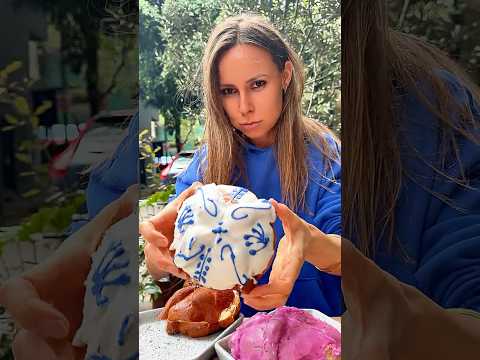
The dark totomoxtle one and the beetroot are the two that make the box look like nothing else in the city, and the limoncello cream inside is the surprise: citrus and alcohol-warm rather than the plain sweetened nata that fills most of the city’s versions. The right shot is the bread torn open rather than the bread sitting whole.
Where to find it in the season
They start early. Social posts had pan de muerto on sale here in August, well ahead of the usual run-up, and the bakery was among the thirteen exhibitors at the sixth Festival de Pan de Muerto at Museo Kaluz in the Centro Histórico on 3 and 4 October 2026.
Seasonal lines at a bakery this size do not restock forever, so the back half of October is a safer bet than the first days of November.
What it costs
El Pan de María does not publish a fixed price list, and the seasonal breads are not reliably listed on the delivery apps either, so the only honest answer is to ask when you message them.
For context on the market this year, a supermarket pan de muerto starts around 20 to 30 MXN a piece and a filled one from a named bakery runs well above that. A sourdough-based bread with a limoncello cream from a restaurant bakery sits at the upper end of that spread.
How to book
There is nothing to reserve, but ordering is more work than it should be, and it is worth knowing why. The delivery apps carry a bakery’s everyday counter. The pan de muerto is a seasonal line that runs for a few weeks, so most bakeries never put it on the apps at all. Looking for it there and concluding they do not make it is the standard mistake.
- Message them. WhatsApp, or a DM on TikTok or Instagram, is how you actually order the seasonal bread, confirm what is running and ask the price.
- In person at Santa María la Ribera 138, from 07:00. Earliest is best at a bakery that bakes overnight.
- Across the group. If the bakery has sold out, the same breads are sold at María Ciento38 and Ninna Pastificio.
- TikTok @elpandemaria is the verified account. I could not verify an Instagram handle, so check in the app rather than guessing.
- Ask what is in today. The lineup moves and so does what has sold out by mid-morning.
Getting there
- Address: Santa María la Ribera 138, colonia Santa María la Ribera, Cuauhtémoc, Mexico City.
- Landmark: a few steps from the Kiosko Morisco, the Moorish pavilion in the Alameda de Santa María, which is the reason to make a morning of it.
- Finding the door: the restaurant is in a casona and the entrance is a corridor filled with plants. The bakery is the small storefront at the front.
- Metro: San Cosme on Line 2 and Buenavista are both walkable.
Before you go
- Go early. The oven starts at 02:00 and the doors open at 07:00. At least one reviewer got a piece that tasted a day old, so the hour matters here more than at most bakeries.
- The lineup changes every year. The pink one was a rose-petal tuna in 2025 and beetroot with guava in 2026.
- Tear it open rather than slicing it. The limoncello cream is the point and it shows better torn.
- Make it a walk. The Kiosko Morisco is a few steps away and the colonia is one of the most pleasant in the city on a weekend morning.
- Reviews are split, so set expectations accordingly and buy fresh.
- Ask the price when you message. It is not published anywhere, and the seasonal bread is usually not on the apps.
- Check the hours before you go. The hours on this page come from the venue’s public listings, which drift, so confirm before a special trip.
Watch the visit
The reel above is episode four of my 2026 pan de muerto guide: the black totomoxtle loaf, the beetroot one and the limoncello cream inside. For the other episodes, see Croque Voyage in Coyoacán and Pan Ajeno in Santa Fe, and for the rest of the city open my map or the Mexico City recommendations.
Frequently asked questions
What pan de muerto does El Pan de María make in 2026?+
Three versions. The original, built on a sourdough starter and scented with fresh citrus peel. One made with ceniza de totomoxtle, the ash of charred corn husks, which is what turns it dark. And a beetroot version filled with guava. All three carry an artisanal cream made with the house limoncello, the Nonna's own.
Why is the pan de muerto black?+
The dark version takes its colour from ceniza de totomoxtle, ash made from charred corn husks. Totomoxtle is the dried husk that wraps a tamal, and burning it to ash is an old technique in Mexican cooking rather than a modern colouring trick. It is what gives that bread its ancestral character, and it is the reason this one photographs the way it does.
Who is behind El Pan de María?+
A Sicilian family from Palermo. The recipes come from the personal recipe book of Antonietta Di Pasquale, known as the Nonna, who moved from Sicily to Mexico City with her family in 1979. Her daughter, Cristina María Cialona, directs Grupo María La Italiana, which runs the restaurant María Ciento38, the pasta shop Ninna Pastificio and this bakery. She is the María in the name.
What makes this pan de muerto different from everyone else's?+
Two things. It is built on masa madre, a sourdough starter, where most pan de muerto is a straight enriched dough, and the filling is a cream made with limoncello rather than the usual nata or cajeta. The combination is the point of the place: a Mexican ritual bread made from a Sicilian grandmother's book.
Where is El Pan de María and when does it open?+
Santa María la Ribera 138, in the colonia of the same name, a few steps from the Kiosko Morisco. The restaurant occupies a 19th-century casona and you reach it through a plant-filled corridor; the bakery is a small storefront at the front of the house. The oven is lit at 02:00 and the doors open at 07:00, so it is a genuine early-morning bakery.
How do I order the pan de muerto?+
Message the bakery directly, by WhatsApp or by Instagram or TikTok DM. This is the thing nobody tells you: the delivery apps carry a bakery's everyday counter, but the seasonal pan de muerto is usually not listed on them at all, because it runs for a few weeks and the apps are not worth the setup. Ordering pan de muerto in Mexico City is mostly a messaging exercise.
Is the pan de muerto at El Pan de María worth it?+
Reviews are genuinely split, so go in knowing that. One pan de muerto ranking praised a well-balanced orange and butter flavour with a golden outside and a fluffy crumb. A 2025 reviewer got a piece that tasted a day old and dry. At a bakery that bakes overnight, the hour you buy may matter more than usual.
Why is it called El Pan de María?+
After Cristina María Cialona, the daughter of the Nonna and the director of Grupo María La Italiana, whose name runs through all three places: the restaurant María Ciento38, the pasta shop Ninna Pastificio and this bakery. The 138 is the street number, Santa María la Ribera 138. The seasonal bread is sold across all three, so if one has sold out, ask at the others.